
Why beautiful rooms don’t always work - and how to get it right
One of the most common things I notice when visiting clients’ homes is a room that almost works.
The colours might be lovely.
The furniture is beautiful.
But something still feels slightly off.
Often the issue isn’t style.
It’s scale and spacing.
A sofa that’s too large for the room.
A coffee table that’s just out of reach when you sit down.
A dining table that leaves no room to move around it comfortably.
These small details have a huge impact on how a room feels and functions. When the proportions are right, a space feels effortless to live in. When they’re not, the room can feel awkward, cramped, or unfinished, even if everything in it is beautiful.
As an interior designer, scale and spacing are some of the first things I consider when planning a room.
Why scale matters more than people realise

Furniture can look completely different in a showroom compared to your home.
Large retail spaces often make furniture feel smaller than it actually is, which is why pieces that seemed perfect in the shop can completely dominate a room once they arrive.
Equally, choosing pieces that are too small can make a room feel disjointed and underwhelming.
A well-designed room balances proportion, function and flow so that everything sits comfortably within the space.
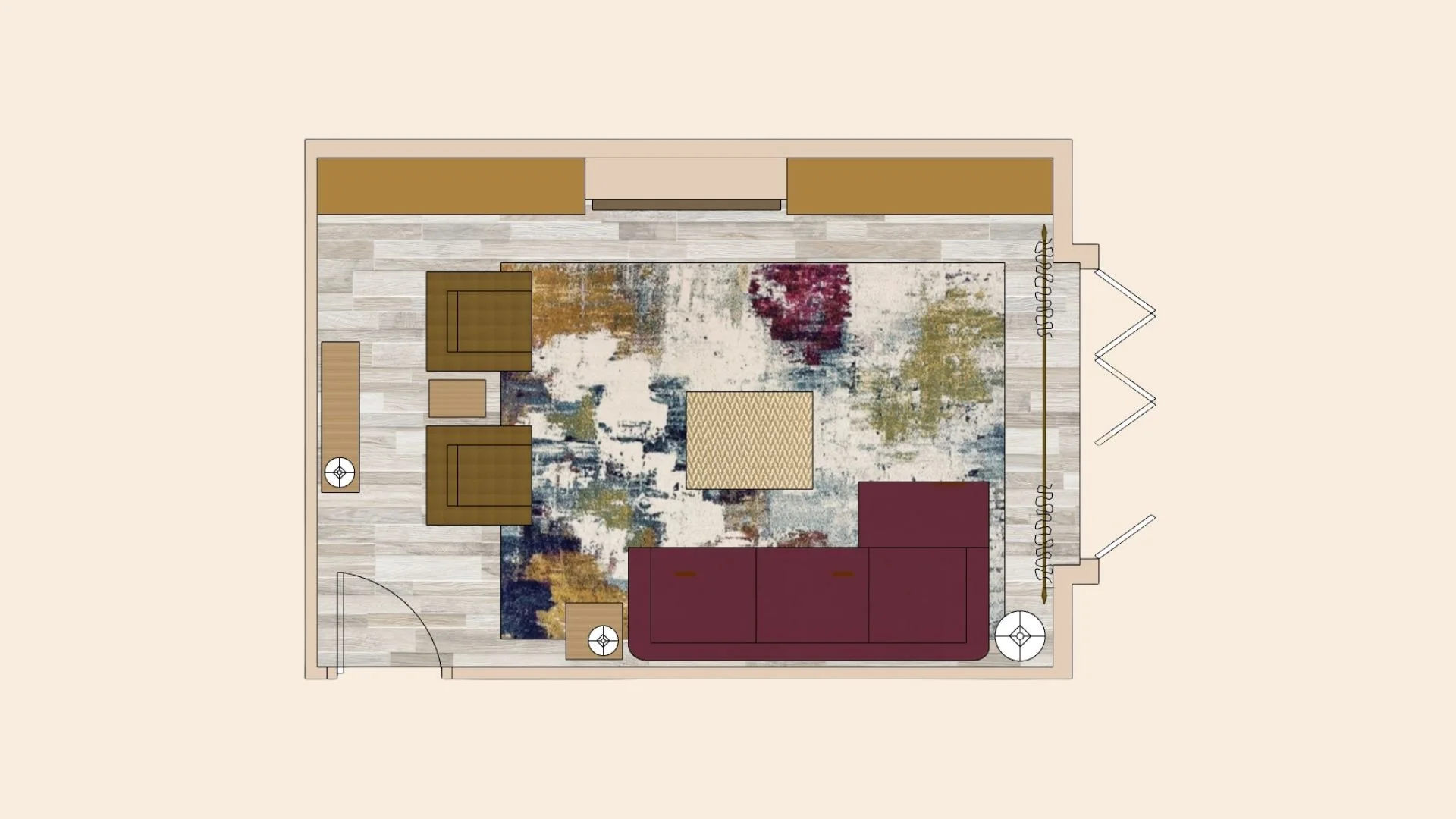
This is why floorplans are such an important part of my design process. Before anything is purchased, layouts are tested to ensure the furniture is correctly scaled and positioned.
It allows me to check practicalities
such as:
Can people comfortably walk through the room?
Is there somewhere nearby to place a drink when seated?
Will dining chairs hit the wall when pulled out?
Do curtains have space to stack back properly?
These are the details that transform a room from looking nice to working beautifully for everyday life.
How to get the scale of furniture right
One of the biggest challenges homeowners face is knowing how large furniture should be within a room. Pieces that are too small can make a space feel disjointed, while oversized furniture can overwhelm the room and disrupt the flow. While every home is different, here are some useful guidelines I often use when planning layouts.
Sofas
A good rule of thumb is that a sofa should typically be around two-thirds the length of the wall it sits against. For example, if your wall is 3 metres long, a sofa around 2 – 2.2 metres usually feels well balanced.
If the sofa is much smaller, the wall can feel empty and disconnected. If it fills the entire wall, the room can feel cramped and inflexible. It’s also important to allow breathing space at either side of the sofa so the furniture doesn’t feel squeezed into the room.
Coffee tables
Coffee tables are often chosen too small. Ideally, a coffee table should be around two-thirds the length of the sofa. This creates the right visual proportion while ensuring the table is practical for everyday use.
In terms of height, the coffee table should be the same height as the sofa seat or slightly lower, making it comfortable to reach when seated.
Rugs
Rugs are another area where scale often misjudged. A rug that is too small can make a room feel fragmented. Instead, aim for a rug large enough that at least the front legs of sofas and chairs sit on the rug. In larger rooms, placing all furniture legs on the rug can create an even more cohesive and luxurious feel.
Armchairs
Armchairs should feel visually balanced with the sofa. Very slim chairs paired with a deep, substantial sofa can feel out of proportion. Instead, consider how the shapes and volumes relate to one another. Spacing is also important. Ideally allow around 45–60cm between seating pieces, leaving enough space for side tables and comfortable movement.
Side tables
A side table should sit roughly level with the arm of the sofa or chair. If it’s too low it becomes awkward to use, and if it’s too tall it can feel visually intrusive within the space.

The spacing rules designers rely on
Again every home is different but as a rule of thumb I use the following numbers to help ensure a room feels comfortable to move through and functions well day to day.
Sofa and coffee table
Ideally allow 40–45cm between the sofa and coffee table. This keeps the table within reach while still allowing comfortable movement around it.
Walkways
Main walkways through a room should ideally be 90–100cm wide. This ensures people can move comfortably through the space without feeling restricted.
Dining tables
Allow at least 90cm between the dining table and walls or furniture. In larger rooms, 100–110cm creates a more generous and comfortable layout.
Kitchen islands
The ideal spacing between an island and cabinetry is 100–110cm, allowing drawers and appliances to open fully while still maintaining good flow.
Why floorplans change everything

One of the biggest advantages of working with a designer is being able to test layouts before committing to furniture.
Sometimes clients come to me convinced a particular solution will work - often a corner sofa or oversized dining table - but when we place it on a floorplan, it quickly becomes clear that it compromises the space.
For example, in a recent project the client hoped to incorporate a corner sofa into their Airbnb living space. On paper it seemed like the obvious choice. However, once mapped out we discovered it would block the curtain line and create an awkward seating arrangement.
Instead, we opted for a three-seater sofa paired with two armchairs. The result created a far more sociable layout and allowed the room to breathe.
These are the types of decisions that are much easier to solve before furniture is purchased.
The difference good spacing makes
When scale and spacing are carefully considered, a room naturally feels:
• calmer
• more balanced
• easier to move around
• more comfortable to live in
It’s often the subtle details people can’t quite put their finger on - but they’re what make a room feel truly well designed. Designing a room isn’t just about choosing beautiful pieces. It’s about ensuring those pieces work together within the space.
When scale, spacing and layout are thoughtfully planned, the result is a room that doesn’t just look good in photographs - it works effortlessly day to day.
Download the Interior Designer’s Scale & Spacing Cheat Sheet
A simple guide to help you avoid the most common layout mistakes in your home.
